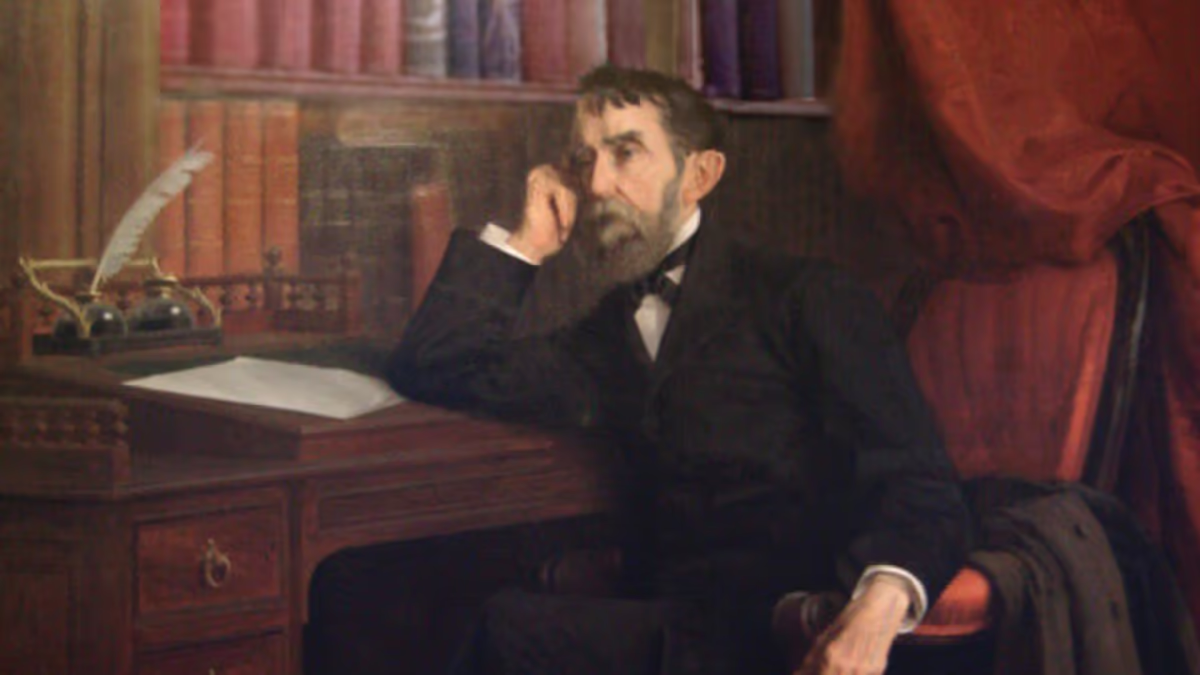
Rafael Núñez was born in Cartagena on September 28, 1825, and died in the same city on September 18, 1894. His relationship with El Cabrero traces a history connecting domestic life, writing and major decisions in nineteenth-century Colombian politics.
Returning to Cartagena and Soledad Román
After his years abroad, Núñez landed in Cartagena on December 2, 1874. Among the connections he renewed was his relationship with Soledad Román, with whom he would share the house in El Cabrero.
He had left the country in 1863 after participating for several weeks in the Rionegro Convention as Panama’s representative. He lived in New York and later held consular positions in Le Havre and Liverpool.
During that period he wrote for newspapers and developed political and social arguments collected in Ensayos de crítica social, published in Rouen in 1874. His return to Cartagena came the same year that book appeared.
His relationship with Soledad also preserves a particular feature of the period: their civil wedding in July 1877 was held by proxy while she was in Paris. Eduardo Román represented Núñez; the religious marriage took place in Cartagena in February 1889.
The Regeneration and the 1886 Constitution
Núñez was a central figure in the Regeneration, the political project that promoted a shift from a federal order to a centralized organization. The Constitution of 1886 was a decisive expression of that transformation.
His career also included writing. Núñez authored the lyrics of the national anthem, a separate aspect of his work as a statesman that helps explain the combination of literature and politics in his public life.
Before the new Constitution came an initial presidential term between 1880 and 1882. During that period the National Bank was created, protective tariffs were promoted and the railway project between Bogotá and Girardot advanced.
Núñez returned to power in 1884. The following year’s civil war changed the dispute over the federal system and strengthened his alliance with Conservatives against Radical Liberals. The Regeneration developed through that political and military rupture.
The Council of Delegates brought together nine Independent Liberals and nine Conservatives to establish the foundations of the new organization. It was therefore not a Constitution written by one person, although Núñez directed the project that made it possible.
The 1886 text replaced the federal structure with a centralized state and established Catholicism as the official religion. The 1887 Concordat gave the relationship with the Church another institutional form. Those were separate changes, although they belonged to the same political cycle.
The house as a place of memory
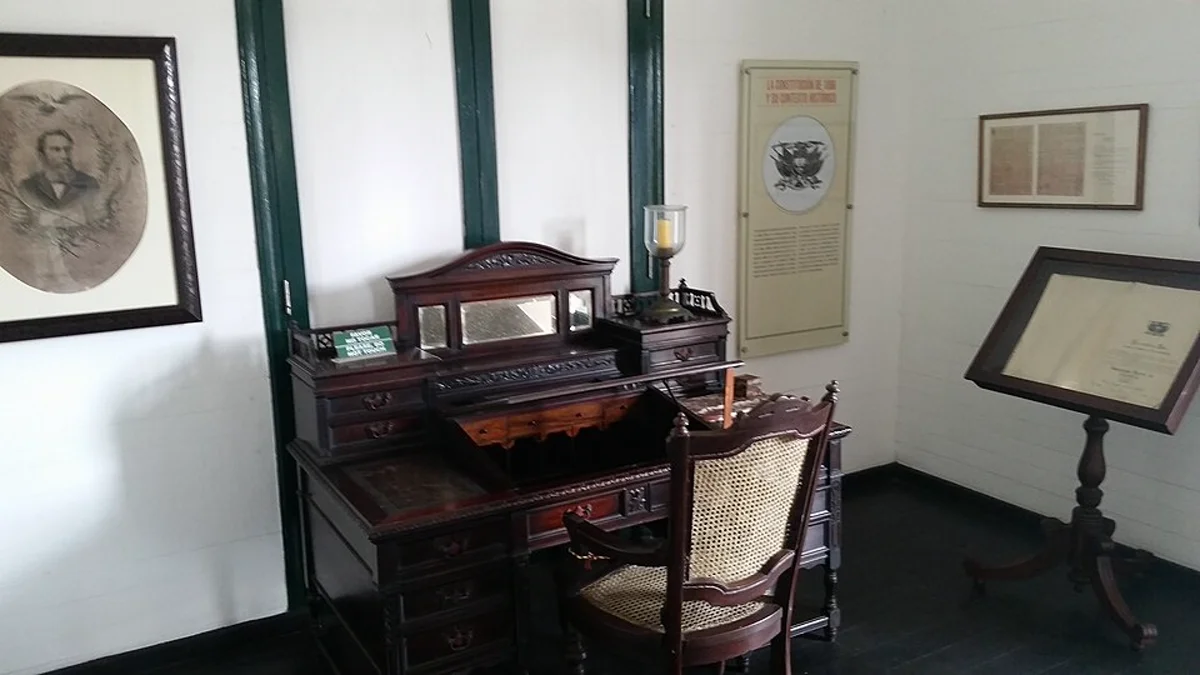
The Rafael Núñez House Museum preserves the physical connection with El Cabrero. Its rooms offer a way to approach a nineteenth-century domestic setting and the shared memory of Núñez and Soledad Román.
El Cabrero brings together domestic life and the final stretch of that public career. The house’s history includes Soledad Román and Núñez’s family relationships alongside his position as president and writer.
He died in Cartagena on September 18, 1894. In preceding years Miguel Antonio Caro exercised government as vice president. Núñez retained the presidency while Caro took on the decisions of government.
The lawyer who began in his city’s administration
The career preceding exile and the presidency also included Cartagena episodes. Núñez graduated in law in 1844 from the University of Magdalena and Isthmus and began practicing the following year as an advocate for the poor in the city.
In 1849 Governor José María Obando appointed him secretary general. Part of his administrative work coincided with the cholera epidemic that struck Cartagena. At the same time he participated in the Democratic Society and wrote for La Democracia.
In 1852 he worked with Governor Juan José Nieto, who also appointed him rector of Cartagena’s National College. Before moving into national government he had held legal, educational, journalistic and local administrative responsibilities.
From Congress he subsequently presented initiatives on currency, the naturalization of foreigners and Cartagena’s port. His native city’s port thus appeared in his legislative work before the dispute over federalism led him to promote another constitutional order.