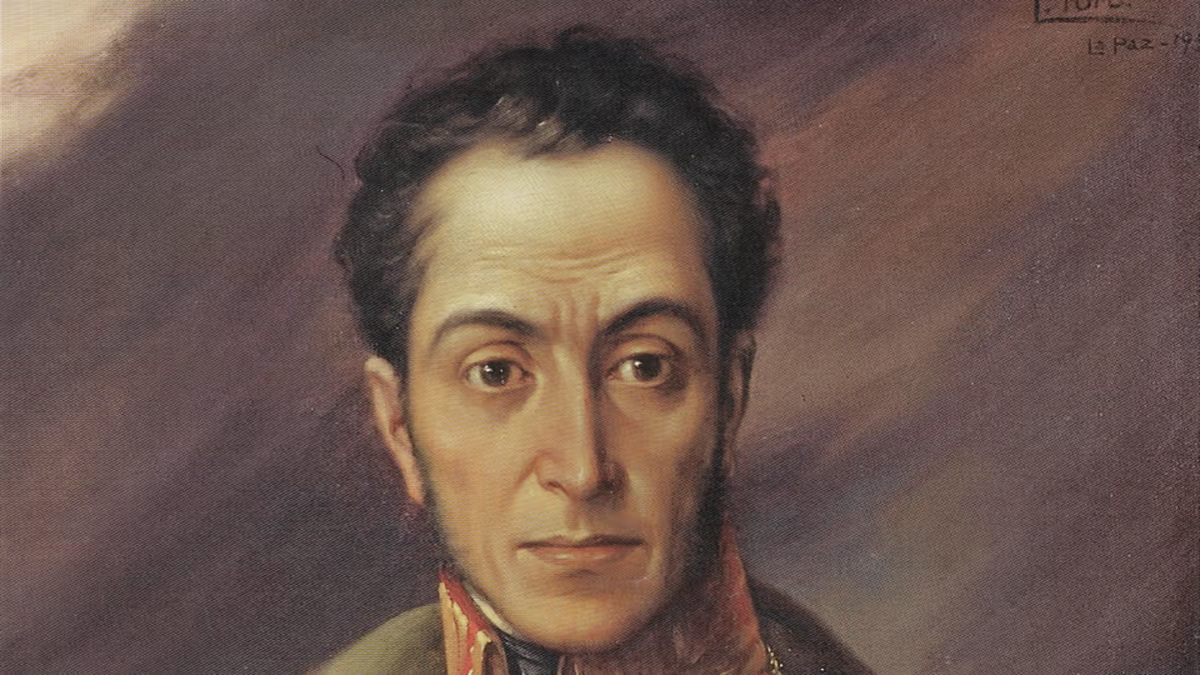
On December 15, 1812, Simón Bolívar dated a reflection on the collapse of Venezuela’s First Republic in Cartagena. Known as the Cartagena Manifesto, the document made his stay in the city a decisive moment in the development of his political thought.
An exile in an independent city
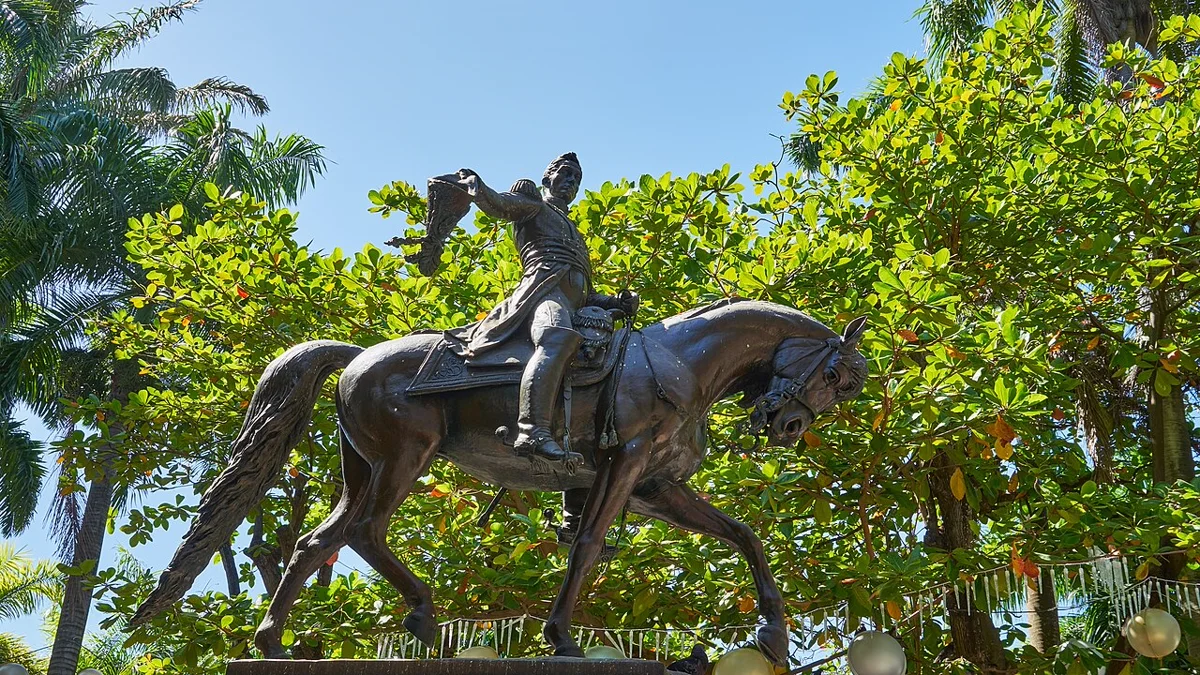
Bolívar did not arrive as the victor who would later appear on monuments and in public squares. He had experienced the defeat of the Venezuelan republican project and had passed through Curaçao before moving to Cartagena de Indias.
Born in Caracas in 1783, he found in Cartagena a place to regroup after the Venezuelan failure. His stay was connected to exile, the search for support and preparations for new operations.
The failure included very recent episodes. In 1812 he had been given responsibility for defending Puerto Cabello, a stronghold that fell to royalist forces. The republic’s collapse and Francisco de Miranda’s surrender dismantled the military framework in which he operated.
Bolívar joined other officers in detaining Miranda. That rupture among independence supporters preceded his own departure: he obtained a safe-conduct, emigrated and sought a chance to resume the war from the Caribbean. His career was not yet a succession of victories.
In Cartagena, the Venezuelan experience became an argument addressed to a different audience. The text did not merely request hospitality for the defeated: it proposed that New Granada treat neighboring Venezuela’s military problem as its own.
What the Cartagena Manifesto proposed
The work was titled Memorial Addressed to the Citizens of New Granada by a Man from Caracas. Its audience was explicit: Bolívar sought to persuade New Granadans that Venezuela’s defeat also threatened their security.
In his explanation, he challenged federalism in wartime and advocated a central authority able to coordinate resources and forces. This was not a neutral description of failure, but the political interpretation of a participant seeking support for another campaign.
He also discussed military organization and the management of public resources. The document’s interest lies in the way it links these weaknesses to a proposal for action, rather than simply recounting what he had lost.
One specific proposal was to replace reliance on poorly disciplined militias with a professional army. Political coordination and fighting capacity were connected: for Bolívar, a dispersed command weakened the response to an organized enemy.
His criticism of political formulas copied without regard for circumstances reflected that urgency. He did not reject discussion of how to govern, but subordinated the republic’s organization to its ability to survive during a war.
His conclusion had a precise destination: the recovery of Caracas. He presented an offensive into Venezuela as a way of protecting New Granada rather than an unrelated adventure. An assessment of defeat thus became a request for cooperation between territories.
Cartagena as a place to regroup
The next steps put dates to that strategy. After operations along the Magdalena, Bolívar occupied Cúcuta in February 1813. Between May and August he advanced into Venezuela in what became known as the Admirable Campaign.
In October that year, Caracas officially granted him the title of Liberator. Between the Cartagena document and that recognition came recruitment, movements and battles: writing the manifesto was part of regrouping, not a substitute for it.
Returning to Cartagena after another defeat
The sequence did not end in 1813. Venezuela’s Second Republic lost ground again and, after the patriot defeat at La Puerta in June 1814, Bolívar had to abandon Caracas. The apparently restored project proved vulnerable once more.
Cartagena again provided refuge for him and other officers. Defeat in 1814 led to another stay, following the military advances that had succeeded the writing of the manifesto.
The manifesto is best read within those advances and reversals. It expresses a participant’s response to a specific crisis; his centralizing preferences were one position within republican disputes, not a formula accepted by everyone fighting for independence.